Widespread latent nanobot exposure
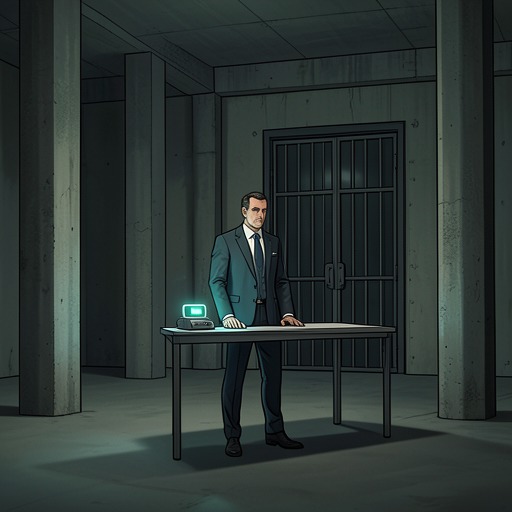
Panic RoomWidespread latent nanobot exposure is the concealed precondition of Cascade: nanobots have entered people through medicines, cosmetics, food production, and other products associated with Harkness Pharmaceuticals, while remaining inactive until an external trigger sets off a chain reaction. What first appears to be a secret confined to Wortalleth West is revealed as a worldwide technological network, one whose ordinary routes into daily life make its potential consequences difficult to see or contain.
Nature and Scale of the Exposure
Filippo Crosetti explains that Jack Harkness recruited Astrid and then him to develop a nanobot programme intended to produce a result they believed the world needed. Over the previous five years, according to this account, people who used Harkness Pharmaceuticals drugs or cosmetics had absorbed nanobots. The stated routes are varied: swallowing or injecting medicines, absorbing beauty treatments through the skin, eating crops grown with the company’s pesticides, and eating meat from animals treated with its antibiotics. The examples range from headache remedies and anti-malarials to pain relief, Elixtris, and Fenextris. The exposure therefore crosses the boundary between treatment, consumer product, agriculture, and food.
The nanobots do not remain in the body indefinitely: Crosetti says they eventually flush out. That natural limit does not end the exposure, because new units continually replace them as factories around the world produce more. The repeated industrial replenishment turns a temporary presence into a continuing condition. Crosetti characterizes them as a plague without symptoms before activation, so neither an individual’s experience nor the ordinary passage of time offers a clear warning that the system is present.
Infrastructure and Hidden Preparation
The scale of the programme is foreshadowed by the unusual power arrangements at Wortalleth West. Mike Coleman says Harkness commissioned Sympergy to build a large solar array in a rented field roughly half a mile inland, then supplemented it with transparent photovoltaic film on the house’s south-facing walls and garage block. Coleman describes the film as less than a millimetre thick and based on oligomer cells rather than silicon, an installation designed to be inconspicuous. Harkness also bought a substantial flow battery: a full rack of modules about as tall as the room in which Coleman speaks with Don Challenor.
Coleman regards the combined power supply as excessive and cannot locate the battery. Don, who has already noticed the possible panic-room entrance, withholds that suspicion rather than disclose it to Coleman. The house’s hidden steel barrier could, in the engineer’s account, be a sliding door to a two-storey chamber, but the expected independent cables, pipes, air supply, and phone line cannot be traced. Those provisions might be exceptionally well shielded; their presence is not confirmed in this discussion. Later, Crosetti identifies the Wortalleth West system as powerful enough to initialize Cascade. In retrospect, the surplus energy and concealed architecture are not merely eccentric features of an affluent property: they belong to the physical infrastructure of the threat.
Activation and the Cascade Mechanism
The nanobots’ danger lies not simply in their distribution but in the method by which they can be activated. Crosetti explains that Doctor Tau solved the problem of controlling nanobots from outside a host and triggering their pre-designed function. Cascade works by chain reaction: one activated unit triggers another, then another, so long as they remain within ultrasonic range. The process can therefore propagate from unit to unit rather than requiring each person to be reached separately.
Wortalleth West’s system can initiate the chain. Crosetti identifies overrides at Wortalleth West and in Locarno, and says only he and Harkness know how to operate them; without those controls, there is no way to stop the process once it begins. The trigger is linked to the panic room: breaching it will set Cascade off. The locked room thus has a second significance beyond its possible function as a place of refuge. Its breach is built into the activation scheme, so an attempt to penetrate a concealed chamber can unknowingly set a distributed system in motion.
Disclosure and Stakes
The revelation follows a trail of material clues. Coleman’s questions about the missing flow battery and the disproportionate independent power supply give Don reason to suspect a connection between the house’s energy systems and the hidden room. Meanwhile, the room’s unexplained steel barrier and apparently absent life-support connections leave open the possibility that the structure is not a conventional, accessible panic room. The later explanation joins these mysteries without making every earlier uncertainty disappear: the chamber’s exact internal arrangements remain uncertain in the cited exchange, but its breach-trigger function is made explicit.
Crosetti confirms the danger when Don asks whether Cascade will follow once the room is breached. He also confirms that nanobots have been pumped into the world for years, while distinguishing the longer period of distribution from the more recent period in which they were properly designed for their intended function. His assurance that the system will work makes the threat more than a speculative possibility. Yet he describes the decision behind it as a choice between catastrophes, saying that he believes the plan is madness as well as sanity and that Harkness and Astrid would regard his hesitation as a loss of nerve. His account presents the programme as an attempted response to environmental collapse: the discussion preceding the disclosure cites the forecast that at least one fifth of species may be extinct or near extinction by 2050 and frames the coming crisis as a human-caused sixth mass extinction. The evidence establishes the claimed aim of preventing that catastrophe, but the full intended effects of Cascade are not specified here.
Narrative Significance
The exposure recasts the ordinary as a delivery network. Medicines, cosmetics, pesticides, and antibiotics are not only consumer or agricultural products in Crosetti’s explanation; they are channels through which a hidden technology becomes widely distributed. Likewise, the inconspicuous solar film, the oversized battery, and the concealed steel barrier reveal how an engineered system can depend on both minute devices inside human bodies and substantial infrastructure hidden in a private building.
The asymmetry of knowledge is central to the danger. Millions may carry nanobots without symptoms, while only a small number of people understand the activation mechanism and the controls. Even a person who discovers the panic room may not know that opening it has consequences beyond the house. The threat is therefore sustained by concealment at two scales: individual exposure is invisible, and the machinery capable of activating it is concealed within Wortalleth West. Cascade binds those scales together, turning a local act of entry into the possible beginning of a chain reaction whose reach extends far beyond the site.